
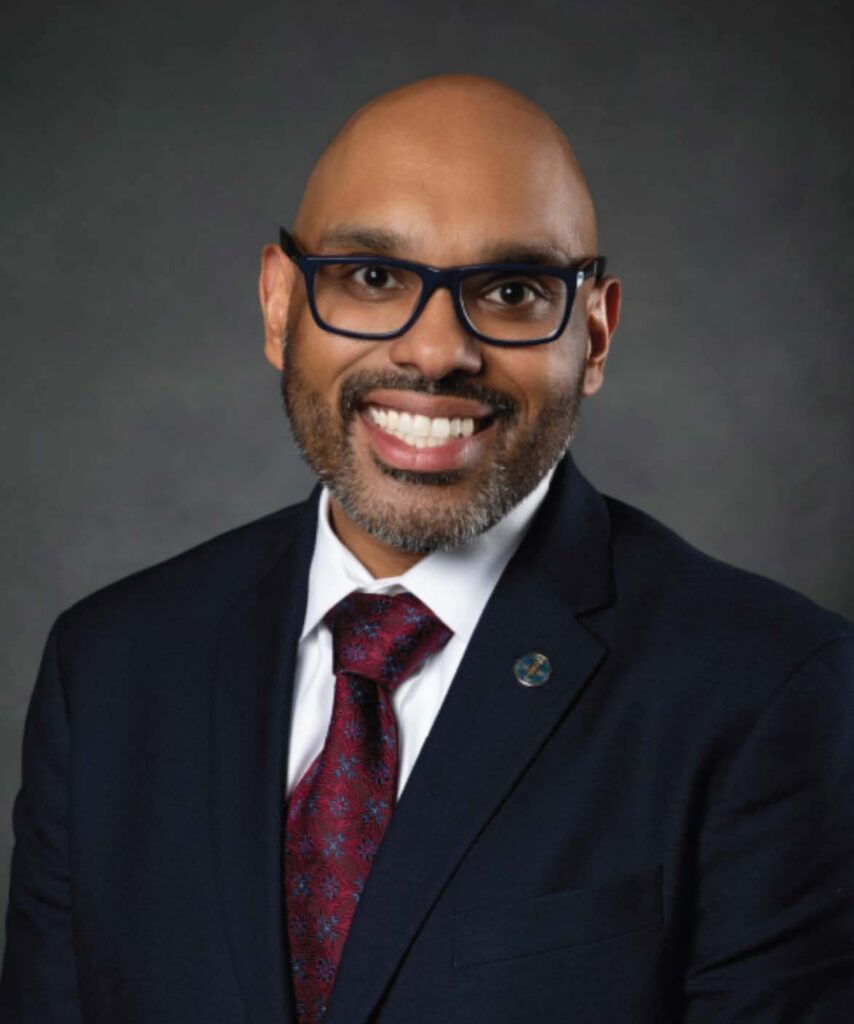
I’ve spent much of my career practicing medicine outside the four walls of a clinic, riding with the CDU-KEDREN Mobile Street Medicine program through the streets of South Los Angeles, treating patients on sidewalks and in shelters, and meeting people where they actually are.
And along the way, I’ve met patients living with life-threatening diseases who have never had the opportunity to join a clinical trial, let alone had an established treatment plan to combat their symptoms. Not because they weren’t sick enough, but because the research and medicine never came to their neighborhood.
The breakthroughs happening in medical research today are real and exciting. And while access to them has never been evenly shared, especially among Black and Brown communities, Proposition 38 may be our opportunity to change that.
Prop 38, the Immunology Medical Research & Cures Initiative, provides $8.4 billion in vitally needed funding to accelerate life-saving immunology research to prevent and cure the diseases that touch nearly every California family: cancer, heart disease, Alzheimer’s, Parkinson’s and others.
What is immunology? Immunology harnesses the body’s own immune system to detect and stop diseases, and it’s already leading to remissions and extending life for people with cancers like melanoma, lung cancer and leukemia.
Here’s what makes Prop 38 special: The funds go to California nonprofit universities and research institutes, not for-profit corporations. The structure matters for Black Angelenos because it keeps the research anchored inside public and academic institutions that are best prepared and positioned to serve broad, diverse patient populations.
Imagine having a world-class hub of research with an expansive network of other universities and research institutes here in Los Angeles and what that would mean to patients from Watts to Westwood and beyond.
Black Americans face major health disparities: They are more than twice as likely as white Americans to develop multiple myeloma, and Black men are 92% more likely to die from prostate cancer than white men. In California, Black residents have the highest death rates from five major cancers, while Black Americans nationwide are twice as likely to develop Alzheimer’s. These disparities require urgent action on all fronts.
California voters have no shortage of competition for state dollars: schools, housing, homelessness and roads. It’s a fair question to ask why the state should take on the responsibility of funding medical research when so many other priorities are also underfunded.
The answer is that Prop 38 won’t be directly competing with those priorities because it’s designed to pay for itself.
Ten percent of the proceeds from licensing successful cures and treatments developed under the measure returns to the state to help pay off the bond, including interest. After that, the funds will continue to support life-saving medical research for generations to come.
Also, curing and preventing the diseases that drive so much of California’s health spending can bring down health care costs for families and the state in the long term. And any cure or treatment developed under the measure must be offered to California patients at a 20% discount below the national average, a direct return for the people whose state made the research possible in the first place.
People in our community don’t have the luxury of waiting for science to eventually get around to them. Every year without access to trials and treatment is a year of pain and, sometimes, lives we cannot get back. Prop 38 is a real chance right now to provide better treatments and cures for patients and families who have waited long enough.
Please join me and organizations like the NAACP California Hawaii State Conference, California Black Health Network and Social Equity LA by voting YES on Prop 38.
Jerry P. Abraham, MD, MPH, CMQ, is a board member of the California Black Health Network; a family and community medicine physician at Kedren Community Health Center; and a faculty member at Charles R. Drew University of Medicine and Science and the UCLA David Geffen School of Medicine.